Thursday, July 26, 2012

Cordes-sur-Ciel, France Summer 2012

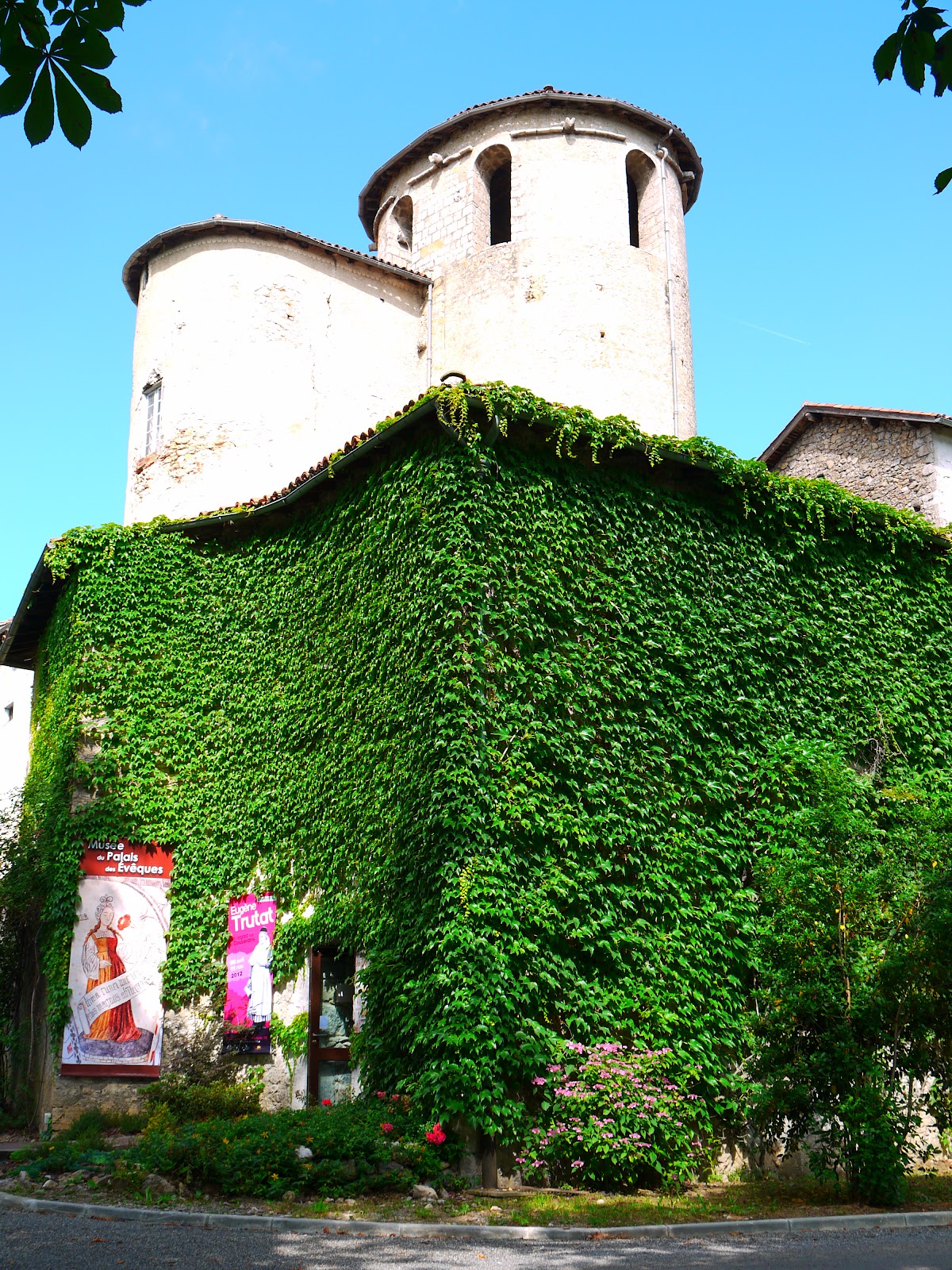
All photos are in Cordes-sur-Ciel


Montsegur, France Summer 2012

Montsegur from the parking lot

View from the top of the hike

    Inside the fort

On the observation deck

    View of village below

           From the edge

Edge on the other side

                           Awesome view

                        Inside the fortress

Same view for the past 900 years

                           From the trail  

                            Front entrance

The Cathars in Languedoc


The Cathars, also known as the Albegensians were a religious group appearing in Europe during the 11th century.  No one is certain of their true origin and whether or not they were true Christians, although they did call themselves Christians.  They are thought to have beginnings with the Bogomils and Gnostics.  They were called Cathars by the Roman Catholics as a derogatory term, catharos being a Greek word meaning “purified ones”.  In general, they held the belief that the world was governed by two gods, one good and one evil, and that the trappings of the material world were evil.  Cathars believed that the path to liberation included renouncing the world, living a pure life and freeing oneself from the corrupting influences of material things.  They believed in reincarnation, a life of simplicity, not killing, taking oaths or telling lies.  Their diet was strictly vegan.   Although there was a church hierarchy and ceremonies, there were no church structures.
The area of Languedoc was not ruled by kings; rather it had several counts and was an autonomous region from the north of France with its kings.  Languedoc had always been an area noted for its liberalism and tolerance.  

It was here that Catharism took root and became the major religion of the area by the early 13th century.  The lack of religious obedience to the Pope and no alliance with the Kings of France did not sit well with either the Pope or the King of France.  Beginning in 1208 the Albigensian  Crusade against the Cathars began; pitting the indigenous population against the King of France and the Pope.  Within a few years, the Counts of Toulouse and their allies were deposed.  As a result,  the Occitian territories were annexed to France under the Treaty of Paris.  It is estimated that 500,000 people were killed in this Crusade; however, not all Cathars were eliminated.  The Cathars had many strong allies in areas from which they were able to obtain permission to build several remote fortified cities. 

On a recent day trip from Toulouse we visited the town of Cordes-sur-Ciel.  It is a small well preserved town on top of a high hill overlooking the Cerou Valley.  Raymond VII of Toulouse decided to build this fortified town in 1222 as a result of losing territory to Simon de Montfort.  Many remaining Cathars took up residence here until they were eliminated by the Inquisition.  Cordes-sur-Ciel was able to prosper following the Inquisition, and remained a viable town until the plagues decimated the population in the 15th century.  Cordes regained some economic prosperity during the late 19th century, but due to its isolation, was not able to compete with better situated towns.  In the 1970’s a move to restore the town and make it a tourist destination began.  Today it is a beautiful place to climb up to and have a great view of the valley below.  Parking is at the bottom of the old town and a 15 minute walk straight up takes you to the top.  Not to worry, there are many shops, restaurants, and galleries along the way if you need to catch your breath. 

Although the Albigensian Crusade ended 1229, the Cathars were able to regroup, thus the cause of the Inquisition in Languedoc.  Locals, not loyal to the King of France would frequently warn the Cathars that the Inquisitors were coming and run them out of town.  In 1232, the Cathars requested and were granted permission to occupy and fortify Montsegur.   After a particular dramatic act in 1242, the assassination of the Inquisitors in Avignonet, King Loius IX of France cracked down on the area.  The Count of Toulouse, Raymond VII was again forced to sign the Treaty of Paris and relinquish power.  That left the town of Montsegur to be brought under control.  The siege of Montsegur began in May of 1243 and lasted 10 months.  Opposition forces aiding the Cathars were lead by Pierre-Roger de Mirpoix, who finally had to surrender the fortress and preserve the lives of his fighters. The remaining Cathars would not surrender and were executed on a wooden pyre, thus putting an end to them once and for all.  The fortified town on the mountain top was destroyed completely and barely a trace can be seen today.

A year later, the new Lord of Mirpoix, Guy des Levis II took an oath to the King of France and requested permission to rebuild the fortress.   At the bottom of the hill, a village was also constructed.  The new fort at the top of the hill stands today.  The new fort was used to guard the area from Spanish invasion and was actively used until the 16th century. The hike is rigorous, going straight up for about 20 minutes over rough terrain. The area is remote, there no shops or restaurants in the area, so bring your own food and water. The new and old forts had a system of cisterns for water. It was said that the vegetarian diet of the Cathars helped them hold out without supplies for long periods of time. Hiking in the area is great, so is the biking, but the terrain is unforgiving, so be prepared. The view from the top is mostly unspoiled, you can easily imagine yourself back in the 13th century.

Interestingly, the Cathars were believed to have amassed a treasure which was never found.  Some think that the treasure is buried somewhere in the hills around Montsegur and may contain among the riches, the Holy Grail.  Those believers think that the Cathars may have been direct descendants of Jesus Christ, thus giving them access to the Holy Grail.  The area of Montsegur has been the focus of many archeological digs; a museum in the village holds the findings of some of the explorations.   Surprising to me, during WWII Nazi historians were looking for a connections between the Holy Grail and an ancient Aryan race.  They investigated the legends hoping to find their evidence in Montsegur.  A 1980’s best seller about the history and the area, Holy Blood, Holy Grail, was written by Michael Baigent, Richard Leigh and Henry Lincoln.

Much is written about the Cathars and the history of this area.  Quick links to the history and lore of the area see:  


Saturday, July 21, 2012

Photos from Le Tour de France, 2012

Leader Stage 18           

Stage 18                       

Uphill Straggler Stage 14


Stage 18                       

Uphill Stage 18

A380 Fly Over Stage 18

Uphill Climb Stage 14        

Nod from Wiggins Stage 14

Le Tour de France, 2012


Le Tour de France
Le Tour as it is called here has captured the world’s cycling imagination for over a century.  The race started July 1, 1903 with 60 cyclists and covered 471 km.   The first winner was Maurice Garin.  This year’s Le Tour will be the 99th running of the event, covering 3497 km from June 30 to July 22.  And thankfully two days are set aside for rest! This year 11 of the stages are in the Pyrenees region, convenient for me living in the Midi-Pyrenees region.  I had the opportunity to see two of the stages that were closest to Toulouse.

We set out fairly early both days to see the Publicity Caravan.  This is a parade of sponsors prior to the day’s cycling stage.  The Caravan was started in 1930 to stabilize the race, allowing funds for teams to use the same equipment and to nationalize the teams.  The Race Director of the times, Henri Desgrange contacted major French companies to become the corporate sponsors of the race.   Since then, sponsorship has grown and the pre-race caravan is what almost 50% of the spectators cite as their reason for coming.  The Caravan is fun, somewhat reminiscent of a Mardi Gras parade where people act silly to get beads.  Here, I’ve taken an elbow to the stomach because someone really had their eye on the keychain trinket being tossed.  My reflexes are not what they used to be, but I still managed to come home with a bag full of laundry detergent, key chains and refrigerator magnets.  The cost for a spot in the parade ranges from 200,000-500,000 euros.  Not to mention the give-aways to toss and manpower to staff the caravan for 22 days as they travel through out the country.

The riders can earn different colored jerseys by winning different stages:
Yellow Jersey: Best Individual
White Jersey: Best Youth
Green Jersey: Best Sprinter
Polka-dot Jersey: Best Climber

The first stage I could get to was Stage 14, one of the more aggressive hill climbs in the Pyrenees.  The race started in Limoux and ended in Foix.  We chose to watch outside a small town called Massat, right before the final hill climb.  At that point, the riders were broken into a lead pack and the main group called the peloton. The peloton was at least 15 minutes behind the lead group.  Somewhere in those 15 minutes, just meters beyond where we were standing, someone threw tacks onto the course.  This caused blow outs for many of the riders, 5 of the entourage motorcycles and a number of the cars.  The lead team, Sky had a rider down with a flat.  Due to road conditions, help took a long time to get to him. Sportsmanship took the lead here, the yellow jersey wearer; Wiggins and the rest of the peloton decided to wait for all to fix flats and ride in together.  No word yet if the tack tosser has been caught or what punishment would be appropriate for this type of sabotage.

Stage 18 from Blagnac to Brive was much less dramatic, the course was relatively flat.  We settled down to watch near the beginning of the race just outside of Seilh.  The Caravan came through, and this time we were a bit savvier.  We stood apart from the crowd, and subsequently gathered a bit more stuff.  The best thing they threw was packets of laundry detergent, so I can do 4 more loads of laundry as a result of going to today’s parade! We saw the group pass by in a blur within 5 minutes of the starting gun.  Since there were no hills and not enough time to slow anyone down, I barely could snap a few pictures before I felt the back draft!  They were gone in a blur.  Can’t wait until next year!

For more information on the History of Le Tour and the current Tour, check the links below.


Tuesday, July 17, 2012

Pictures of St. Lizier, France 2012


St. Lizier, France 2012


Timing is everything. It can turn a bad day into a good one or a great day into something better. This is what happened on our way to see one of the mountain stages of Le Tour. Leaving early in the day, we were in search of the perfect location to watch the bikers go up hill. We wanted to watch as long as possible, hence the uphill destination. Fearing that roads may close, parking may be a nightmare, we planned to be at our destination of Massat two hours earlier than the riders were scheduled to come by. Traffic was light and we made great time, so seeing a village at the top of the hill, we made an unplanned stop in St. Lizier.

St Lizier is an ancient town, with evidence of prehistoric cave painting in the area; people have lived here a very long time. In 72 BC, Pompei passes through on his sweep of the Iberian Peninsula, organizes the tribes into the Consorani people. These people remain under Roman rule for several hundred years. Their town is enclosed with wall during the 3rd century. During the 5th century, the town was important enough to become a bisopric under the guidance of the first bishop, St. Valier. The town is named in honor of its 6th century bishop, Saint Lizier, a bishop who participated in the Council of Agde in 506. His relics are present in the cathedral today. Since the Middle Ages, having the relics of a saint was a draw for pilgrims following the way of St. James.

We parked at the bottom of the hill and made our way up to the top to see the sights. Along the way we were met with a woman taking her blind goat for a walk. We had a nice photo opportunity with our new friends. Then while touring the cathedral, we were invited to have refreshments with the parishioners after mass in the cloister. We were warmly welcomed with wine, cheese and pastis-a very warming beverage! Everyone wanted to be sure we met everyone, and did not get away without knowing that this town has been officially declared one of the most beautiful towns in France as well as a World Heritage of Unesco site since 1998. The town is also part of the road to St Jacques de Compostela (path Pyrenean Piedmont) - The Way of St. James pilgrimage, much more famous for the hike through Northern Spain. The itinerary for crossing Ariege has been designated at Grande Randonnée trail (GR 78). The 140 km can be walked in several stages of about 15 to 20 km each.

Some days are like that; stopping to see what’s there and discovering so much more. Some day I will come back for the hiking and who knows what else there will be to encounter.